Toothaches rarely identify themselves
People often call a dental office hoping the pattern of pain will reveal exactly what is wrong. Sometimes it offers a clue, but rarely a diagnosis.
Decay, a crack, a loose filling, gum inflammation, grinding, an impacted tooth, or an irritated nerve can all cause pain. The jaw and sinuses can refer pain toward the teeth as well. Two problems can even feel remarkably similar.
What matters most is whether the pain persists, returns, wakes you, or changes how you eat. Those are good reasons to book an assessment even if the discomfort is still manageable.
What different pain patterns can suggest
A quick response to cold: Brief sensitivity may come from an exposed root, worn enamel, or recent dental work. If it lingers after the cold is gone, grows stronger, or always comes from one tooth, decay, a crack, or inflammation inside the tooth becomes more likely.
Pain when you bite: A cracked tooth, an irritated ligament around the root, or a filling that sits too high can all hurt under pressure. Stop chewing on that side. Repeatedly biting down to test it only keeps stressing the area.
Throbbing or night pain: Pain that starts on its own or wakes you can mean the pulp—the living tissue inside the tooth—is significantly inflamed. It deserves timely assessment.
A sore area behind the last molar: A partly erupted wisdom tooth can trap plaque and food under the surrounding gum. Swelling, a bad taste, fever, or trouble opening the mouth can indicate infection and should be assessed promptly. Our dental surgery information describes the clinic's broader surgical care.
These patterns are useful when you call the clinic, but they are not a substitute for an examination.
Signs that should move the call up your list
Contact a dental clinic promptly when tooth pain comes with swelling, fever, pus, a persistent bad taste, a tender bump on the gum, a loose or shifted tooth, or difficulty opening your mouth.
Severe swelling that interferes with breathing or swallowing, spreads toward the eye or neck, or occurs with confusion or serious illness needs emergency medical care. Call 9-1-1 for a life-threatening emergency.
Jaw discomfort is not always dental. Chest pressure, shortness of breath, sweating, nausea, or pain spreading to the jaw, shoulder, or arm can signal a heart emergency. Call 9-1-1.
Getting through the wait for an appointment
Clean the area gently in case food is trapped, and continue brushing with a soft toothbrush. Avoid anything that clearly triggers the pain. If the face is swollen, use a cold pack wrapped in cloth for short periods; do not apply heat.
Non-prescription pain medication may help, but the right choice depends on your health and other medicines. Follow the package directions. Ask a pharmacist if you take blood thinners, have kidney or liver disease, ulcers or allergies, are pregnant, or are choosing medication for a child.
Do not hold aspirin against the tooth or gum. It can injure the tissue. Do not start leftover antibiotics. Antibiotics are not appropriate for every toothache and often cannot fix the source without dental treatment.
How the dentist tracks down the source
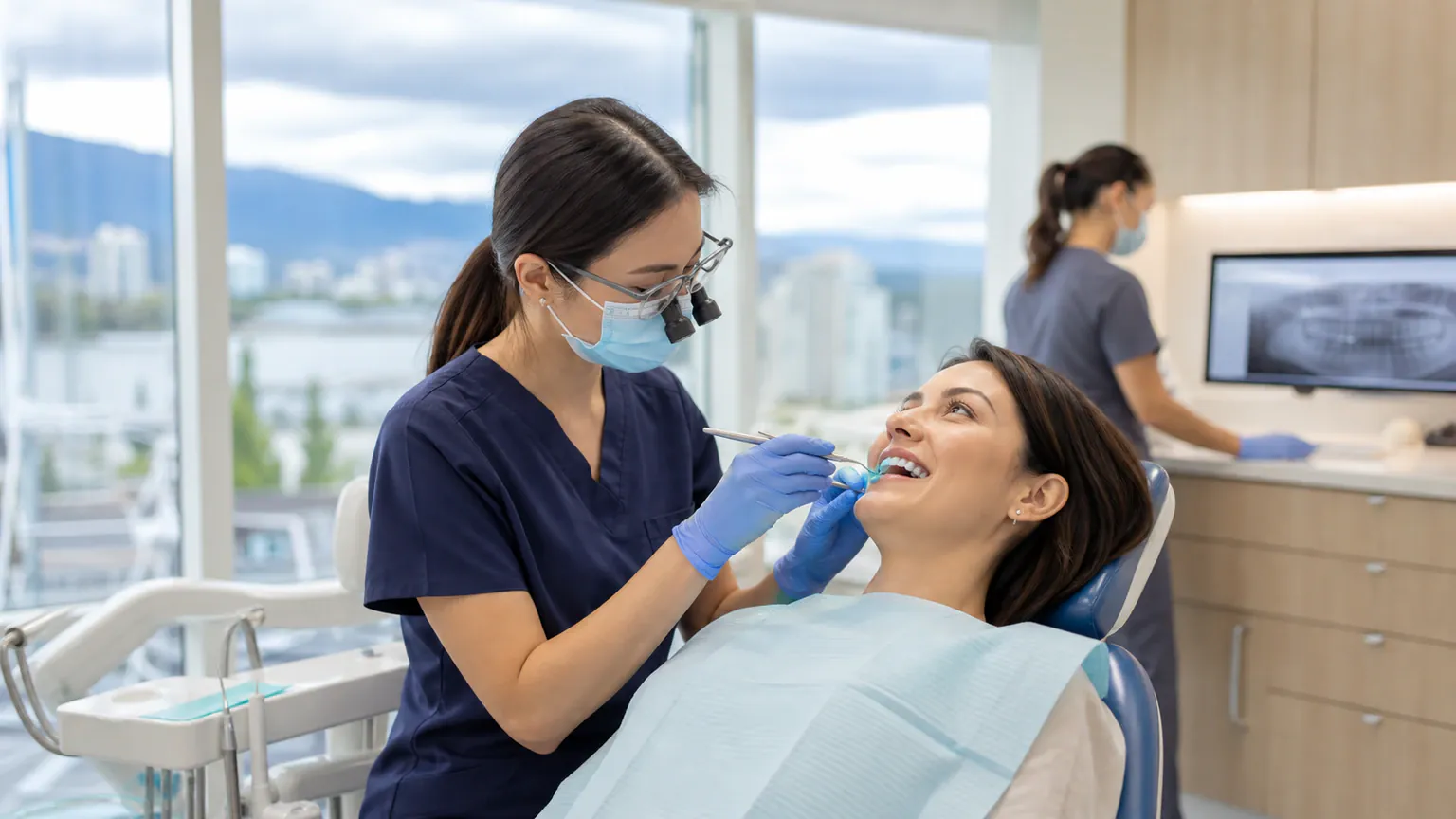
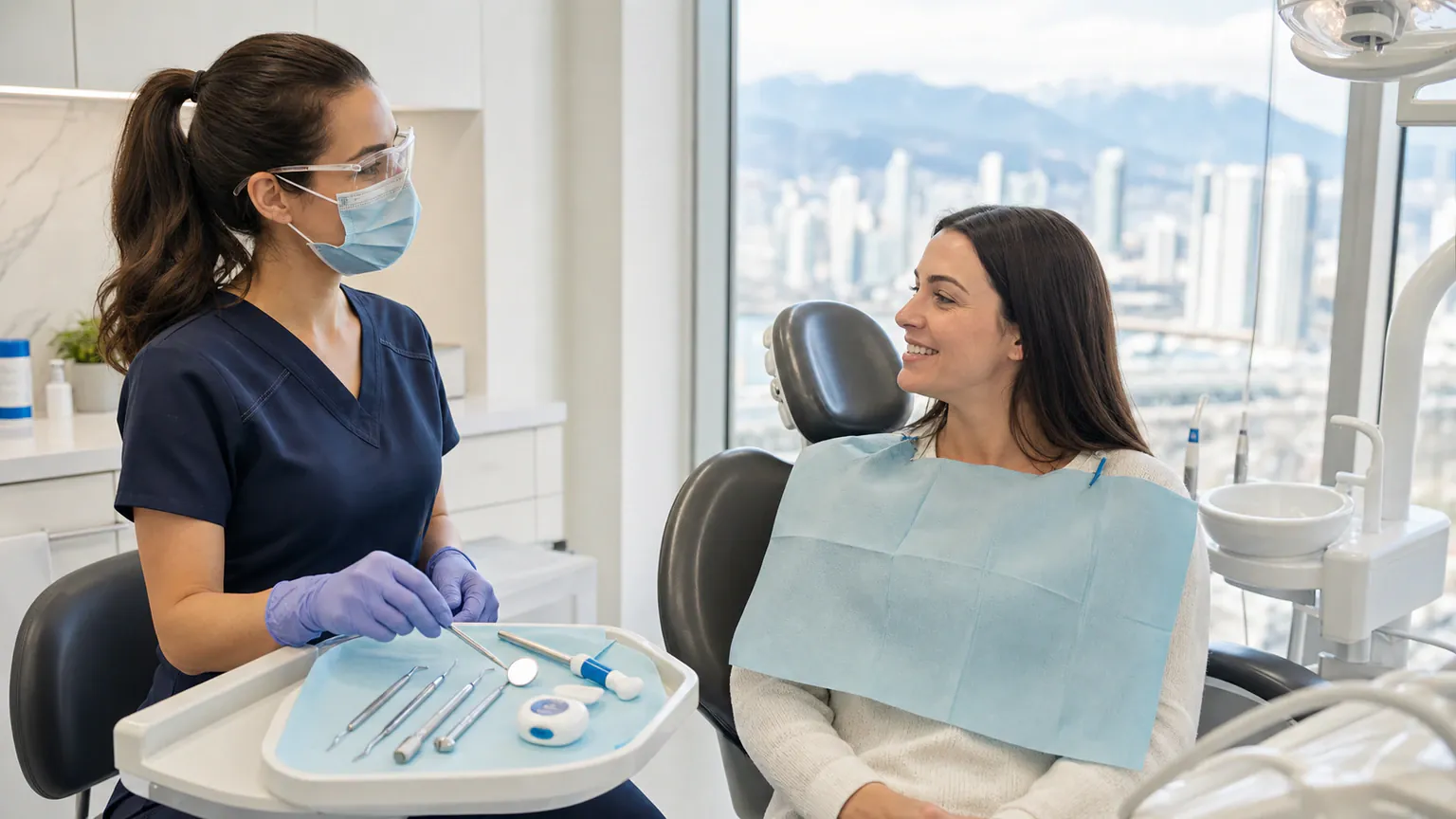
Expect questions about when the pain began, how long it lasts, and what sets it off. The dentist may examine the bite, gums, jaw, and neighbouring teeth rather than looking only at the spot you point to.
Cold testing, gentle tapping, bite tests, and X-rays each answer different questions. X-rays can reveal some decay, infection, and bone changes, but not every crack will appear on an image. The diagnosis comes from putting the whole picture together.
Treatment could be a filling, an adjustment, root canal therapy, gum care, extraction, or something else entirely. The important sequence is diagnosis first, treatment second.
If the pain disappears
Keep the appointment unless the clinic tells you otherwise. A tooth can stop hurting because irritation has settled—but it can also become quiet when the pulp is no longer responding normally. There is no reliable way to tell which has happened from home.
Routine visits can catch some problems before they hurt, as explained in our guide to dental visit intervals. New pain, however, does not need to wait for your next scheduled checkup.
Related dental care
Sources
- Toothache and Gum Problems — HealthLink BC
- Tooth Decay — National Institute of Dental and Craniofacial Research