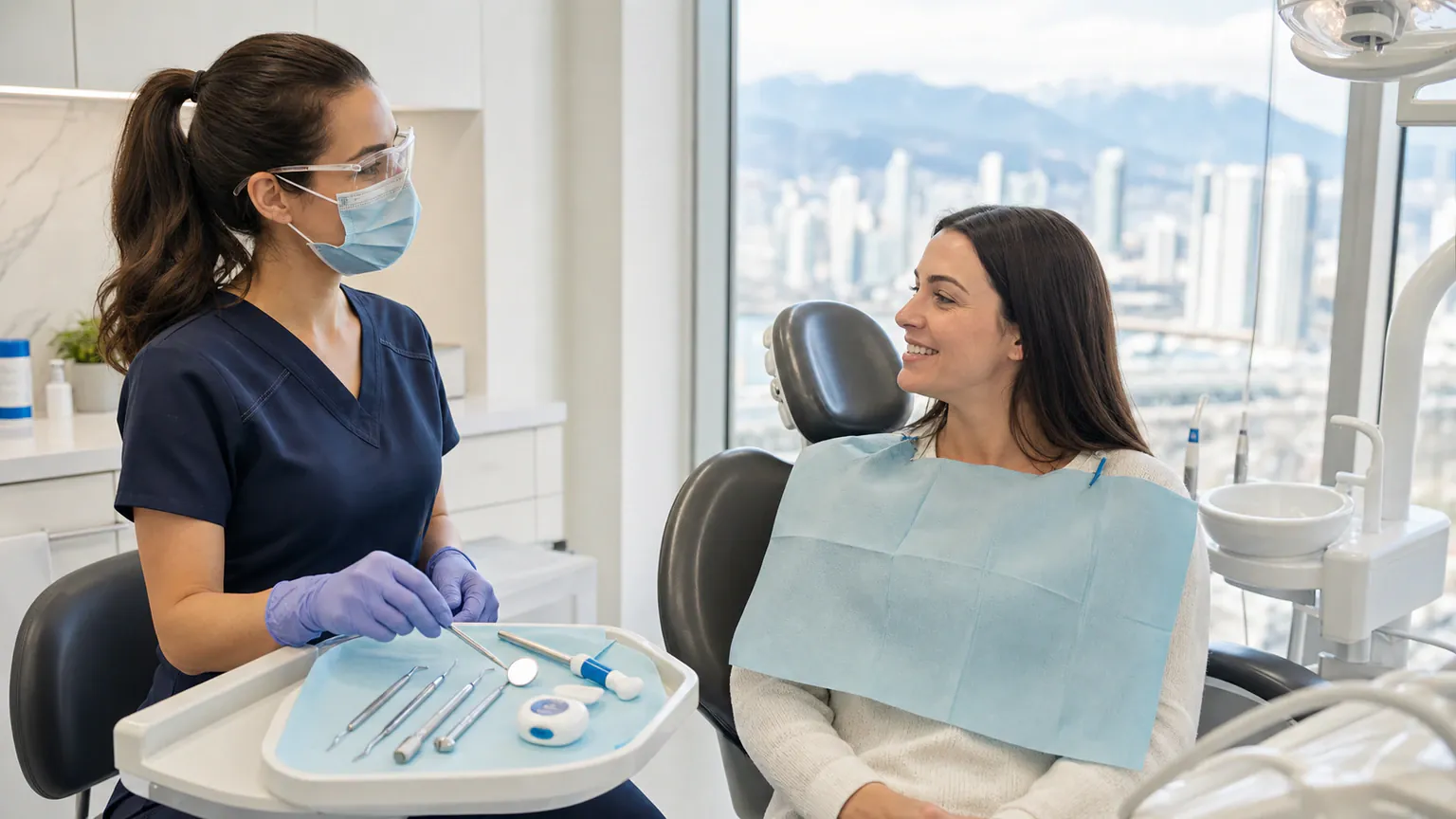
A checkup starts with a conversation
The first few minutes may feel routine, but they matter. Your medical history, medications, allergies, and recent health changes can all affect dental care. So can pregnancy, a new diagnosis, a recent surgery, or a medicine that has left your mouth unusually dry.
This is also your chance to tell the team what has been happening between visits. A twinge when you drink something cold, gums that bleed in one spot, morning jaw tension, a rough filling, or a sore patch that keeps returning may seem minor at home. In the chair, those details help focus the exam.
And if dental visits make you anxious, say so. The same goes for a strong gag reflex, sensory sensitivities, mobility concerns, or a difficult past experience. None of that is an inconvenience. It is information the team can use to make the appointment more manageable.
What the dentist is actually looking for
A dental exam is more than a cavity check.
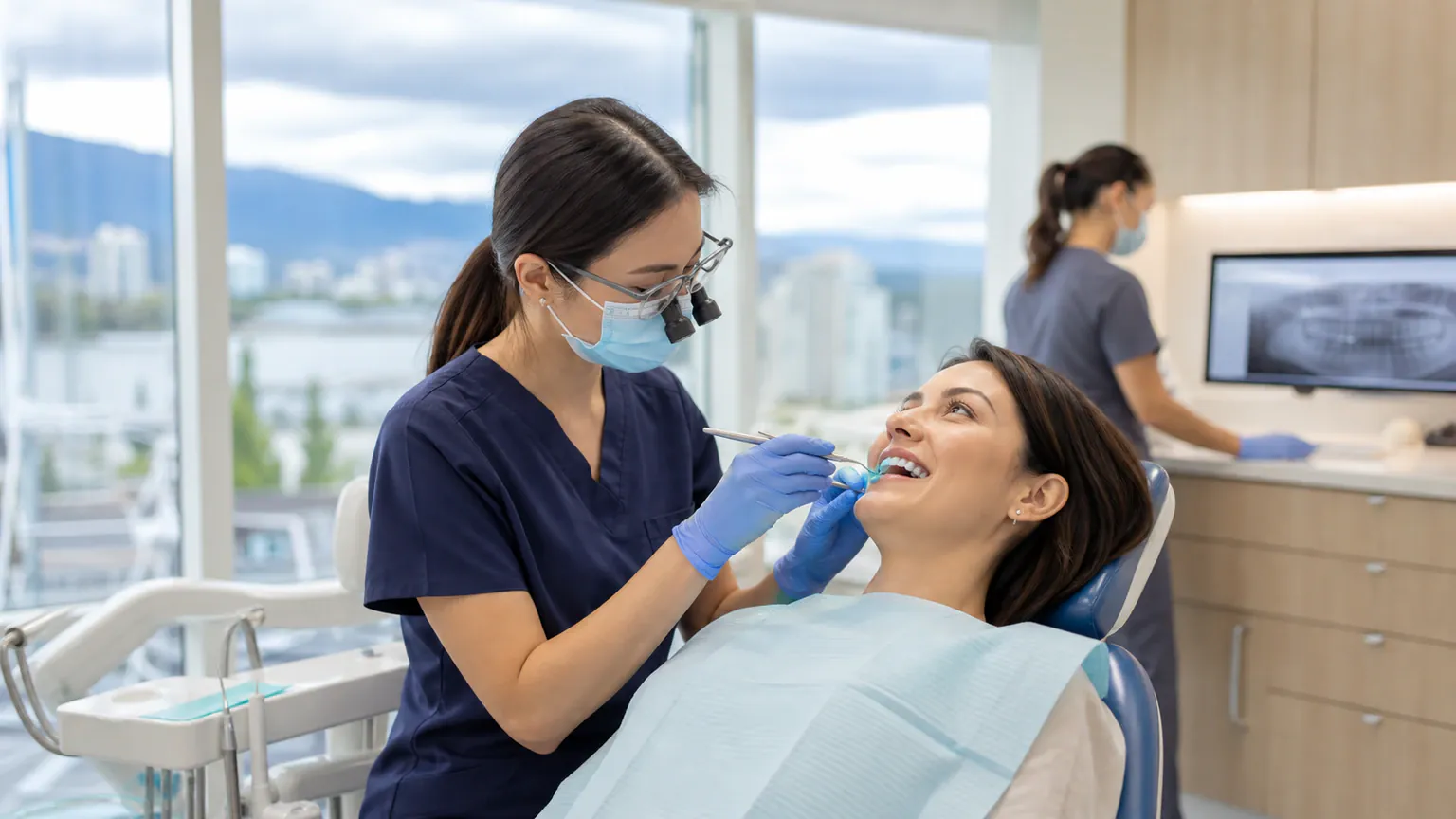
The dentist looks over each tooth for decay, cracks, wear, and changes in colour or position. Existing work—fillings, crowns, bridges, implants, dentures, retainers—gets checked too. A restoration can look fine to you and still have an edge that needs monitoring.
The gums tell another part of the story. Redness, bleeding, recession, tartar, and changes in the spaces around the teeth can point to inflammation or gum disease. When needed, the dentist or hygienist may take measurements around individual teeth and compare them with earlier records.
The exam usually extends beyond the teeth. Expect the dentist to look at the tongue, cheeks, lips, palate, and the floor of the mouth. They may also assess your bite, jaw joints, and the tissues around your head and neck. This is where a lingering sore, unusual lump, colour change, or restricted movement becomes important to mention.
X-rays are based on need
Many patients wonder whether X-rays are automatic. They are not.
Dental X-rays can reveal things that cannot be seen directly, including decay between teeth, changes around a root, bone loss, or the position of teeth that have not erupted. Whether you need them—and which type—depends on your symptoms, age, oral-health history, disease risk, and the images already on file.
It is perfectly reasonable to ask what an X-ray is meant to clarify. If you are pregnant or may be pregnant, tell the team so the dentist can consider the clinical need and timing.
Exam and cleaning: connected, but not the same
The dentist performs the examination and makes a diagnosis. A dental hygienist focuses on gum health, removes plaque and hardened tartar, and helps you improve the areas that are difficult to clean at home.
Sometimes both happen in one appointment. Sometimes they are scheduled separately. If the gums need more than routine preventive care, the hygienist and dentist may recommend a different approach rather than trying to fit everything into a standard cleaning.
Our guide to what happens during a dental cleaning explains that part of the visit in more detail.
The part patients should not rush
Once the exam is finished, the dentist should explain what they found. Some areas may simply need to be watched. Others may call for a filling, gum treatment, fluoride, a nightguard, or a referral.
If treatment is recommended, you do not have to leave with unanswered questions. Ask to see the area on an X-ray or photograph when possible. Find out what would happen if it were monitored, whether there are reasonable alternatives, and how soon a decision is needed. Cost and insurance questions belong in the conversation too.
Before you head out, make sure three things are clear: what looks healthy, what needs attention, and when the team wants to see you again. That short summary is often the most valuable part of the appointment.
Related dental care
Sources
- The Dental Exam — Canadian Dental Association
- Basic Dental Care — HealthLink BC